
In-Depth Review: MAKE1 Air mini2 — Redefining Lightweight Asset Protection Standards
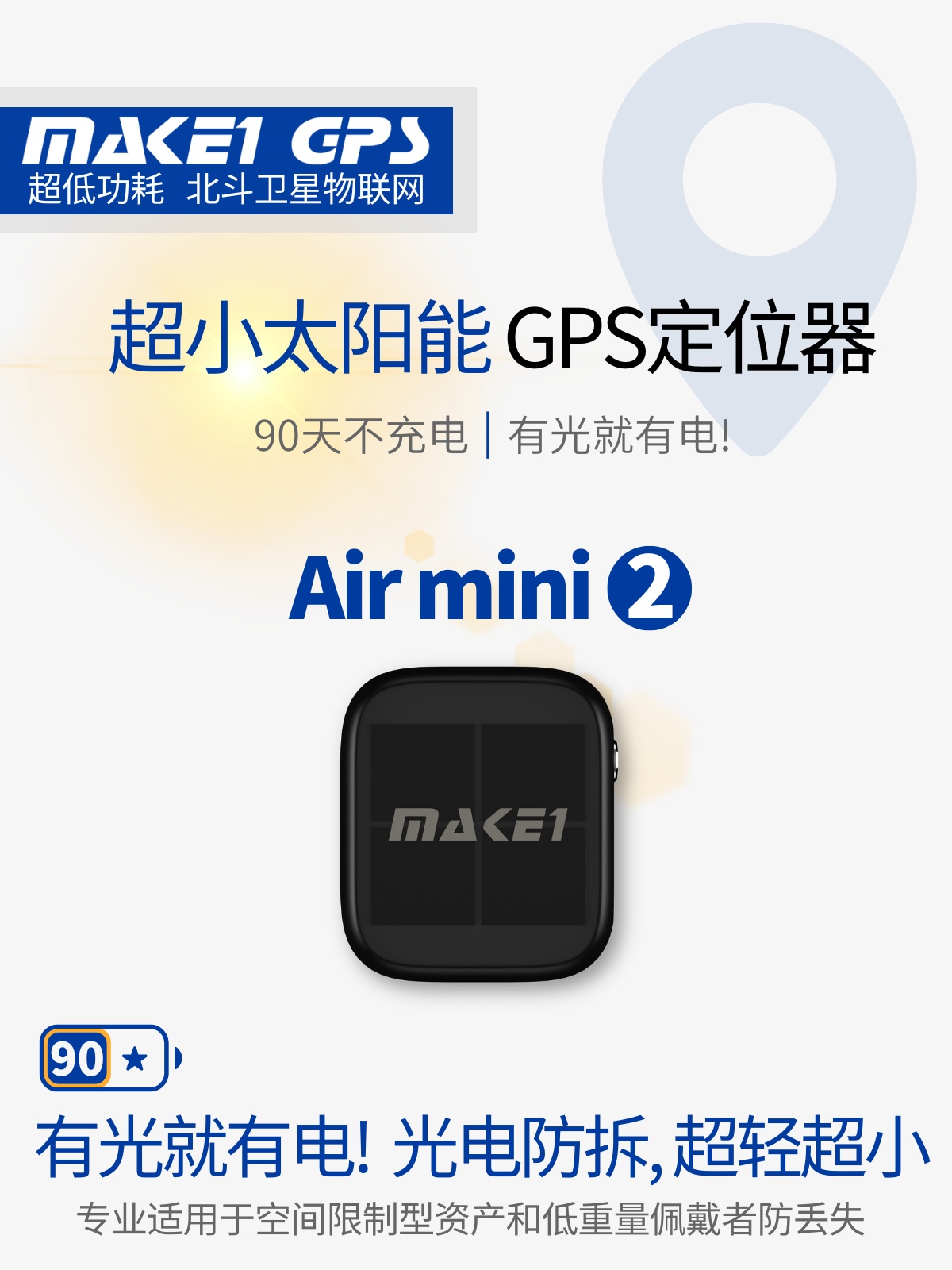
In-Depth Review: MAKE1 Air mini2 — Redefining Lightweight Asset Protection Standards
In the field of IoT tracking devices, battery anxiety and device portability have long been two core pain points restricting user experience. Traditional trackers often force users to compromise between "long battery life" and "compact size," while regular charging maintenance easily leads to device offline at critical moments.
Based on the latest Mlasting-M4 low-power architecture, MAKE1 has launched the Air mini2 solar-powered tracker. Rather than simply stacking specifications, this product builds a "zero-maintenance, highly portable, strong interaction" asset protection solution through three core technologies: Micro Solar system, extreme lightweight design, and NFC Tap-to-Info.
This article provides a professional analysis of the Air mini2 from three dimensions: technical principles, compliant installation scenarios, and functional testing.
One. Core Breakthrough: From "Passive Charging" to "Energy Self-Sufficiency"
The biggest technological innovation of the Air mini2 lies in its full-back electrode monocrystalline silicon photovoltaic wafer. Unlike traditional solar devices that rely on direct sunlight, this module significantly improves photoelectric conversion efficiency, enabling true "micro-light energy harvesting".
1. Micro Light Recovery Mechanism
Test data shows that under indoor diffused light or overcast conditions, the Air mini2 can still maintain micro-current input. This means the device can effectively slow down power consumption even in long-term low-light environments (such as indoor storage or shaded areas).
Unlimited Battery Potential: Under sufficient lighting conditions (e.g., outdoor cycling, window placement), the device can achieve energy balance, theoretically reaching "lifetime no charging".
Emergency Backup: For extreme low-battery situations, as long as the device is exposed to weak light, the charging circuit activates instantly, rapidly restoring tracking functionality—eliminating the risk of traditional devices becoming permanently offline after a single power failure.
2. Offline Tracking Defense
As a safety fallback strategy, the Air mini2 integrates an independent backup power management module. Even if the main battery is physically removed or completely drained, the device can still maintain 7 days of low-frequency signal transmission using residual energy. This "offline tracking" window provides crucial golden time for asset recovery.
Two. Industrial Design: 18g Extreme Lightweight and Portability
In asset management, device lightweight directly affects user wearing comfort and installation flexibility. The Air mini2 weighs only 18 grams, with extremely thin thickness, making it the benchmark for lightweight solar trackers in its class.
Seamless Carrying: Its ultra-lightweight design allows it to adapt to various fixed installation environments. Whether mounted on the outer side of a bicycle frame, the surface of a suitcase, or the back of a pet collar, the device won’t shift due to its own weight or cause discomfort.
Beautiful Integration: Compact size enables seamless integration into various asset appearances without appearing obtrusive, preserving the original aesthetics of the asset.
Protection Rating: Despite its small size, the Air mini2 maintains IPx7 waterproof and dustproof capability, capable of withstanding short-term immersion and heavy rain, meeting usage demands under complex outdoor weather conditions.
Compliance Notice: This product is designed primarily for personal asset theft prevention and lost item protection. When using, ensure the device is installed on items you own or manage (such as personal vehicles, luggage, pets, etc.), following open and visible installation principles. Do not use for invading others' privacy or illegal surveillance purposes.
Three. Interaction Innovation: NFC Tap-to-Info Technology and Direct Information Access
Traditional lost-item or asset recovery processes typically depend on the device being online and the user actively checking maps. The Air mini2 introduces NFC (Near Field Communication) Tap-to-Info technology, establishing a second line of defense that works even when offline.
No Unlock Required, One Touch Access: The finder doesn’t need to download any app or unlock their phone screen—simply bring a compatible NFC-enabled smartphone close to the back of the device.
Instant Information Display: The phone automatically pops up a pre-set emergency contact page (e.g., family phone number, notes). This greatly lowers the barrier for bystanders to assist in returning the item, transforming "passive waiting for location" into "active instant contact," significantly improving recovery efficiency.
Four. Comprehensive Performance Evaluation
Beyond the three core highlights above, the Air mini2 also maintains professional standards in basic positioning and service systems:
| Function Dimension | Technical Specifications/Performance | Professional Commentary |
|---|---|---|
| Positioning Accuracy | Outdoor ≈ 5 meters (GPS/BeiDou dual-mode) Indoor = WiFi/cell tower assisted | Uses next-generation low-power algorithms, maximizing battery life while maintaining high accuracy. Minimal positioning drift in urban open areas. |
| Response Speed | Millisecond-level data upload | Extremely low data latency when triggering alarms or querying location, ensuring continuous trajectory recording. |
| Service System | Built-in IoT chip 10 years free service | Abandons traditional SIM card model, eliminating hidden costs like data fees and monthly charges, achieving "plug-and-play, worry-free throughout lifecycle". |
| Smart Alerts | Photoelectric anti-tamper + geofencing alarm | When the device is covered (suspected obstruction) or moved outside a set area, the system immediately pushes alerts to the user’s device. |
Five. Application Scenario Recommendations
Based on its technical features, the Air mini2 demonstrates high professional compatibility in the following specific scenarios:
Theft Prevention for Two-Wheeled Vehicles (bicycles/electric bikes/motorcycles)
Rationale: The ultra-light 18g weight does not affect riding experience and can be securely installed on visible or standard positions of the frame; solar power perfectly matches outdoor parking scenarios, ensuring continuous online status.
Tracking High-Value Luggage/Supplies
Rationale: During air freight, charging isn’t possible—solar recharging eliminates concerns about power loss during long-distance transport; NFC function enables quick identity verification at airports or logistics hubs.
Outdoor Tracking for Medium-to-Large Pets
Rationale: Lightweight design avoids adding burden to pets; ample outdoor sunlight enables true unlimited battery life, solving the hassle of frequent charging.
Lost Person Assistance for Elderly/Children
Rationale: When paired with dedicated accessories, the NFC function provides the most direct help channel in case of getting lost; offline tracking offers last-resort protection in extreme situations.
Six. Conclusion
MAKE1 Air mini2 is not merely a product that piles up specifications—it represents a precise technological breakthrough targeting the pain points of "battery maintenance" and "portable installation".
It resolves user charging anxiety through the Micro Solar system, redefines the boundaries of portable installation with 18g extreme lightweight, and establishes a more human-centered social collaboration recovery mechanism via NFC technology. For professional users seeking zero maintenance cost, high portability, and long-term reliable operation, the Air mini2 represents the optimal solution currently available in the lightweight tracker market.
In today’s era where asset security is increasingly important, choosing a tracker that is "powered by light, light as air" is a wise and compliant investment in protecting your valuable assets.
Note: Technical parameters are based on official specifications from MAKE1 and laboratory test environments. Actual performance may vary depending on installation location, obstruction, and ambient light intensity. Users must strictly comply with local laws and regulations when using tracking devices.